


Interview with Legal 500; Partner Perspective Series
“Navigating the Boardroom: Shareholder Disputes in a Cross-Border World”
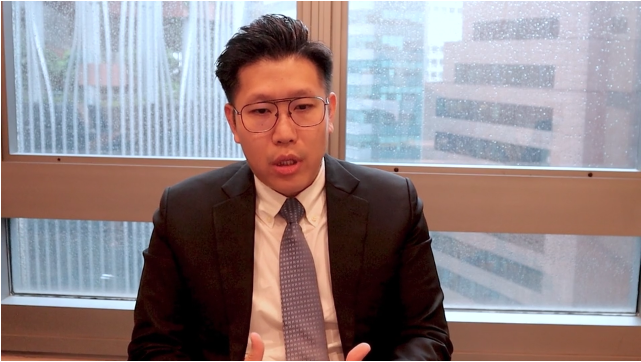
Our Mr Mark Lee spoke at The Legal 500’s “Partner Perspectives” interview on the firm’s “boardroomᵂᴹᴴ⁺” practice group’s experience and specialisation in shareholder, boardroom and joint venture disputes.
We shared our views on a growing trend of increasing shareholder activism and the rising complexity of cross-border complications, as more corporate groups operate globally with offshore structures.
Amongst other views shared, our Mr Mark Lee opined that the key (if there is any) to “future-proof against shareholder and JV disputes” is to maintain an “open channel of communications between the board, the shareholders, and the various stakeholders”.
More specifically, “… you can’t prevent disagreements because these agreements are part of every conversation. And when you talk about a shareholder dispute, you are already talking about a conversation between the board and the shareholders or the stakeholders. And that conversation is an ongoing one, with time, perspectives change, interest change. And so, there are bound to be disagreements. The key here, I feel, is that you need to ensure that there is always an open channel of communications between the board, the shareholders, and the various stakeholders. And that this open channel of communications is one where either faction can feel safe and be able to be frank with which other and have open dialogues and can converse in the way that respects the core interests of all parties. And, and to the best of everyone’s ability. Try to arrive at win-win solutions for everyone.”
The full video and transcript of the interview can be found at these links:-
The Legal 500 – https://www.legal500.com/tv/partner-perspectives/mark-lee/
|
Full Transcript What are the most common shareholder or JV disputes WMH handles, and what trends are emerging? When you talk about shareholder or joint venture disputes, there really is nothing common in the sense that, uh, such disputes manifest in various forms. But at its core, it’s an element of deep distrust between opposing factions. So at WMH, what we deal with is a broad range of shareholder and joint venture disputes involving listed companies all the way to your private companies. And increasingly what we notice as a trend is not only an increase in shareholder activism, but also an increase in a deeper cross border element to such disputes. Given that more companies are now more into offshoring, given that our clientele are, are growing in direction of corporate groups with subsidiaries therapies internationally. How should GCs approach boardroom deadlocks and conflicts between directors and major shareholders? We often tell clients, and this would apply to GCs as well, that the approach must be both preventive and curative. Simply don’t wait until the problem blows up investment of time, investment of capital. And you don’t just mean money, investment of intellectual capital and adequately drafted and well thought through company constitutions, shareholders agreements would greatly mitigate the problem. But particularly for the role of GCs, I think the soft skills and experience that a GC can bring to the table can help navigate the tensions between opposing fact, especially in a shareholder and joint venture dispute. And very often what we see is that a GC can play the role of a breach between opposing fact to clear misunderstandings, to rebuild trust. And the most important element is to kickstart dialogues. And that really is the start of the solution to the main problem in shareholder and joint venture disputes: the lack of a dialogue. What key risks do GCs face in cross-border JVs, especially in Singapore and the jurisdictions WMH operate? In the context of shareholder and joint venture disputes, especially those that are handled by our firm. There’s several difficulties when you deal with cross border disputes. The, the main one, and this applies to any kind of dispute, is the, the clash of cultures, how you deal with different cultures different attitudes of councils from other countries. But to me, one of the main ways that Jesus will have to deal with really is the inability to control the fight on home ground. And what I mean is the issue of governing law very simply, having to deal with foreign law in corporate terms means it creates uncertainty and with uncertainty that increases risk. And this is a risk that GCs will have to try to navigate around to try to work with foreign council to try to find the best solution for the company, for the shareholders, and for the various stakeholders. Can you share one of the more interesting cases WMH handled dealing with shareholder/boardroom disputes? This CEO also held shares in the company, and so it was a dual fight at the boardroom level and also at the shareholder level. But what made it particularly interesting is the fight at the boardroom level, for example, involved a fight between the competing interests of different companies, the issue across directorship, and that he held different heads in different companies, notwithstanding that it’s within the same group. The issue of conflict of interest came up, and that’s something that we have to have to try resolve. But the particularly interesting point about this case was also the fact that he held his shareholding in the public, the company to A BVI incorporated company. And so, when it came to the issue of how he would exercise his shareholder rights in the Singapore company, it became problematic because then we had to go and have reference to the laws of the BVI to see how a beaver company can actually exercise those shareholder rights. And so, this is a classic case of, of a cross border dispute within the context of a joint venture shareholder arena. And, and this is a thick leap of how these kinds of disputes are getting more and more complicated. What should GCs do now to future-proof against shareholder and JV disputes? In my view, like what we said earlier, don’t wait until the problem goes up. Now invest time, invest capital, invest the intellectual capital to think through the agreements that you can have in place to mitigate such problems in the future. |
You May also like


Have any questions? We are here to help.
If you have any enquiry, please do not hesitate to contact us. Leave us a message and we will get back to you shortly.